Ethical fashion best practices and brands to know
Especially because of fast fashion, we know all the excesses: overproduction, waste of resources, exploitation of labor and the animal industry, intensive use of chemicals, and a frantic race for new ephemeral trends. However, faced with this escalating competition, a quality alternative is emerging: ethical fashion. While some brands seek to maximize profits, others aim to promote respect for people, our resources, and animals through equal pay, sustainability, and transparency in working conditions.
On the consumer side, things are also changing, with a collective awareness driven by the desire to give meaning back to the act of buying, to return to the essentials, and to minimize its impact on the environment. A new era is dawning in the world of fashion, characterized by quality, environmental responsibility, and the positive influence of social media. A revolution in the way we consume is underway, driven by the rise of responsible practices and brands that are making a difference.
Why choose ethical fashion?
Fashion is a constantly evolving industry. Trends emerge and fade in the streets, on the catwalks, in the imaginations of designers… according to the moods and desires of consumers. Our way of consuming is an ode to personal pleasure and belonging to a group, dazzled by collections each more seductive than the last.
The consequences are numerous: overconsumption, pollution (with figures often difficult to verify), human failings and tragedies like that of Rana Plaza in April 2013, where thousands of workers lost their lives in the collapse of a building housing precarious garment workshops, constitute an undeniable reality.
But the good news is that, in the face of all this, there are brands committed to offering sustainable, responsible, and fair fashion. They aspire to change the rules of the game by considering their impact on people and the environment.
Add to that the growing role of “disinfluencers” who can be followed on Instagram. These influential figures are turning away from overconsumption to raise awareness among their audience about anti-fast fashion, us spreading the values of eco-responsible fashion by highlighting affordable thrift stores, second-hand clothing boutiques, and emerging eco-responsible brands on the market…
Unless we live in a cave (and even there), we all face the challenges of the climate crisis, inflation, and the simple desire to own less to return to the essentials.
The answer, then, would be to move towards more thoughtful and responsible consumption. It is no longer possible to carry on as if nothing has changed and to consume more and more without a clear purpose.
So, how can we concretely say yes to a greener fashion?
Ethical fashion-best practices
Consuming ethical fashion means taking committed actions throughout the entire purchasing process, from production to the end of the product’s life. Here are some best practices for responsible consumption:
For ethical fashion-look for eco-responsible brands and read the composition labels
Meanwhile Boutique, responsible consumption is accessible to everyone thanks to a hand-picked selection and the highlighting of 17 values, which allow you to buy a product with full knowledge of its origins: Made in France, recycled, handmade, limited edition…
Each brand is carefully selected, according to a charter to meet specific criteria that guarantee quality, sustainability, ethics, and transparency. Transparency, which prevents greenwashing, i a key factor when buying from a brand, whether in-store or online.
To determine if a brand is truly ethical, look into the countries of manufacture, the materials used (that do not come from any animal origin), the transport of materials, the working conditions in the workshops (labels or certifications)…
In other words, forget fast fashion or at least limit as much as possible your purchases of clothing from these brands, Madmade “outside Europe”, known for their intensive and often unscrupulous production practices.
And be sure to check the care labels if you’re in stores. For even easier label deciphering, Clear Fashion is an app that lets you scan clothing barcodes to get information about the brands’ environmental and ethical impact, helping you make more sustainable shopping choices.
For ethical fashion-favor quality over quantity
Opt for quality items that last over time rather than disposable products. This reduces the need to constantly update your wardrobe.
The quality is reflected in the materials chosen:
Opt for clothing made from sustainable and environmentally friendly materials, such as organic cotton, linen, or Tencel.
Or choose products made from upcycled materials, like the Azala brand, which offers children’s clothing made from existing textiles.
Quality is also found in the details of the finishing touches, such as the hems, buttons, and zippers. But also in the cut of the garment, the feel of the fabric against the skin…
Finally, prioritize clothing manufactured under fair working conditions,w ith workers receiving just pay, and thus value quality over quantity, even if it means investing a little more. An ethical t-shirt, well-designed and made under good conditions, has a justified cost that contributes to a more sustainable fashion industry.
For ethical fashion-choose second-hand
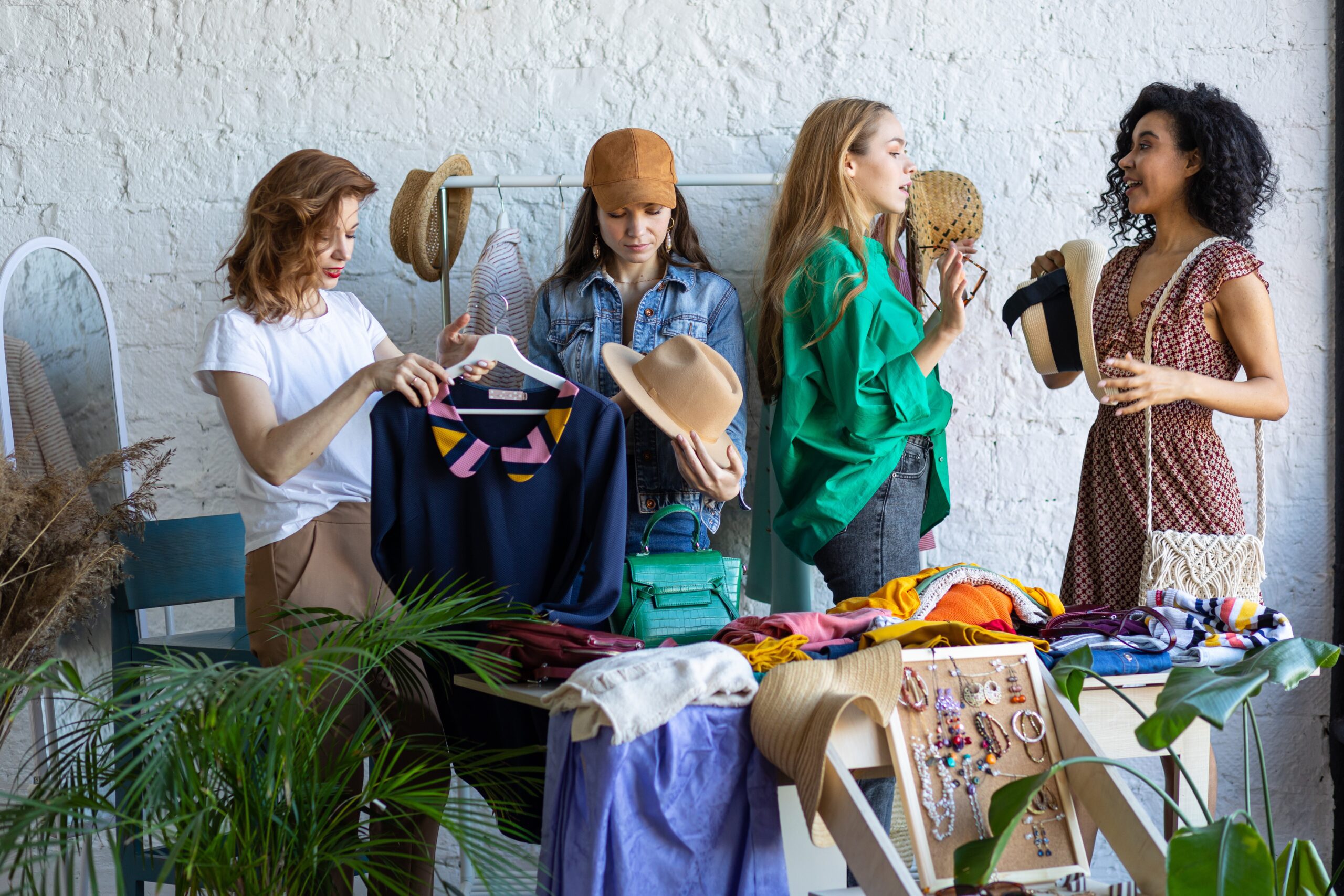
Explore secondhand options, whether in thrift stores, flea markets, or through apps dedicated to ethical fashion, to discover responsible brands and find sustainable alternatives . I our article on secondhand apps, we explore a variety of platforms that allow you to consume more consciously by giving existing clothes a new life.
These steps help extend the lifespan of clothing, thus contributing to the reduction of overproduction and waste. Nothing beats the pleasure of discovering unique treasures while respecting your budget and the environment.
For ethical fashion-repair, reuse, recycle
Embrace a minimalist lifestyle by reducing impulse purchases, prioritizing reuse whenever possible, and recycling your clothes once you’ve worn them out. In reality, our wardrobes don’t need to be overflowing with 10 white t-shirts or 3 identical pairs of black jeans. True pleasure lies in thoughtfully selecting quality, ethically produced pieces, rather than in excess. Finally, if you have some DIY skills and are willing to give discarded fabrics a new life, don’t hesitate to try upcycling— an art form worth experimenting with before opting for clothing made under unethical conditions.
Ethical fashion brands you absolutely need to know
To introduce you to green fashion and responsible consumption, here are 7 committed brands with real values and no support for greenwashing: tthisis a deceptive communication tactic used by companies to give a false impression of environmental commitment, often for marketing purposes.
Ethical fashion-Komodo, the brand with innovative materials
Komodo is a British brand that uses innovative materials such as organic cotton, recycled plastic, Tencel, linen, bamboo, hemp, and wool. It collaborates with SA8000 and GOTS-certifiedries in Indonesia, India, and China. Furthermore, the brand ships some of its merchandise by sea to reduce its carbon footprint. Committed to social responsibility, Komodo supports various charities and environmental projects, including membership in 1% for the Planet. The ethical fashion piece: These super-soft organic cotton joggers will be perfect for cozy evenings or workouts. They are vegan meaning they are made without any animal products, and GOTS (Global Organic Textile Standard) certified: this generally means that the raw materials used, such as organic cotton in this case, were grown without the use of pesticides and synthetic chemical fertilizers.